
I downloaded a PDF file entitled Story of Bob Marley. I got interested because the documents entails memorable dates that tackles events regarding his life (Bob Marley). Upon reading Wikipedia, somehow, most details on the document were somehow similar. I don't know which came out first but one thing is certain, they both coincides. This is very interesting for me since I like most of his song and the unforgettable events of his life and how he became a legend and an icon.
1945 - Robert Nesta Marley is born in a tiny hilltop village called Nine Miles, in the parish of St. Ann in northern Jamaica at 2:30 in the morning of February 6. His father is in his 50s, a white Jamaican named Norval Marley. His mother is the 19-year-old Cedella Malcolm. Although they are married, the couple never lives together because of the disapproval of "Captain" Marley's family, who threaten to disown him.
 1950 - Norval sends for his son to come to Kingston, where he promises to educate him. Sorry that her son is leaving home, but hopeful, Cedella sends Bob alone to Kingston on a mini-bus, where his father meets him. Instead of school, Bob is sent to live with an elderly lady, and never sees his father again. It will be almost 18 months before his mother finds out where he is living and comes to bring him back to Nine Miles.
1962 - Bob Marley, 16 years old, cuts his first recordings for Leslie Kong's Beverly's label.
1973 - "Catch A Fire" is released in a unique zippo-lighter cover and receives rave reviews which hail it as a masterpiece of the new reggae sound. The group records a follow-up album called "Burning" which proves to be the trio's final release together. During the winter of 72-73, the Wailers reportedly work every day in the UK for three months, either in the studio or in concert, and at the end of that time they each receive £100. Bunny quits the group and by the end of the year, Peter Tosh quits as well, wishing to sing his ‘own’ music. The future for the Wailers looks bleak.
1976 - "Rastaman Vibration" becomes Bob's only top-ten album in America, and sells millions of copies worldwide. He plays major European venues, selling out everywhere. By the end of the year, rightly or wrongly, it is felt in Jamaica that Bob's support for Michael Manley will make people vote for the PNP. Bob comes under death threats from the opposition party of right-wing candidate Edward Seaga. On Friday night, December 3, several gunmen break into Bob's compound at S6 Hope Road in Kingston, and shoot Bob, his wife, and Don Taylor, his manager. Two nights later, Bob appears before 80,000 people and plays an emotionally overwhelming set of music, displaying his wounds to the crowd. He then leaves the island for 14 months.
1978 - Bob is approached by rival gunmen from Jamaica's two leading political parties, and asked to come home to headline the "One Love Peace Concert. Bob is the final artist in an eight-hour concert at the National Stadium. At the end, he calls onstage Prime Minister Manley and his enemy Edward Seaga and makes them shake hands in front of 100,000 people. For his actions that night, and for his devotion to world unity and the struggle against oppression, Bob receives the United Nations' Peace Medal in New York in June, given "on behalf of 500 million Africans."
1979 - Bob brings reggae to countries that have never heard it live before, including Japan, New Zealand and Australia. He plays a benefit concert at Harvard Stadium in Boston to raise funds for African freedom fighters. But those around him sense a permanent weariness and fatigue, his face becoming drawn and lined with pain.
 1980 - In September he begins the American part of the world tour as opening act for the Commodores for two sold-out nights in Madison Square Garden, anxious to reach the African-American audience which has always eluded him. The following day, Bob collapses in Central Park while jogging with Danny Sims and "Skill" Cole. Doctors tell him the melanoma cancer has spread to his lungs and brain, and say that he has but weeks to live. Desperate, he turns to a doctor named Josef Issels in Bavaria, and flies to his Bavarian clinic as the year ends.
1981 - Dr. Issels keeps Bob alive for several months, but at the beginning of May he tells Bob there is no more hope. Bob leaves for Jamaica, but makes it only as far as Miami, where his mother lives. On Monday morning, May 11, Bob dies in the company of his family. His final words to son Ziggy are "Money can't buy life."
Truly, money can't buy life. We are the only sole responsible of what life may bring to our lives and we made our own destinies. Bob Marley once said in one of his famous songs. "Life is one big road with lots of signs. So when you riding through the ruts, don't complicate your mind. Flee from hate, mischief and jealousy. Don't bury your thoughts, put your vision to reality. Wake Up and Live!"
Read more »
1945 - Robert Nesta Marley is born in a tiny hilltop village called Nine Miles, in the parish of St. Ann in northern Jamaica at 2:30 in the morning of February 6. His father is in his 50s, a white Jamaican named Norval Marley. His mother is the 19-year-old Cedella Malcolm. Although they are married, the couple never lives together because of the disapproval of "Captain" Marley's family, who threaten to disown him.
 1950 - Norval sends for his son to come to Kingston, where he promises to educate him. Sorry that her son is leaving home, but hopeful, Cedella sends Bob alone to Kingston on a mini-bus, where his father meets him. Instead of school, Bob is sent to live with an elderly lady, and never sees his father again. It will be almost 18 months before his mother finds out where he is living and comes to bring him back to Nine Miles.
1962 - Bob Marley, 16 years old, cuts his first recordings for Leslie Kong's Beverly's label.
1973 - "Catch A Fire" is released in a unique zippo-lighter cover and receives rave reviews which hail it as a masterpiece of the new reggae sound. The group records a follow-up album called "Burning" which proves to be the trio's final release together. During the winter of 72-73, the Wailers reportedly work every day in the UK for three months, either in the studio or in concert, and at the end of that time they each receive £100. Bunny quits the group and by the end of the year, Peter Tosh quits as well, wishing to sing his ‘own’ music. The future for the Wailers looks bleak.
1976 - "Rastaman Vibration" becomes Bob's only top-ten album in America, and sells millions of copies worldwide. He plays major European venues, selling out everywhere. By the end of the year, rightly or wrongly, it is felt in Jamaica that Bob's support for Michael Manley will make people vote for the PNP. Bob comes under death threats from the opposition party of right-wing candidate Edward Seaga. On Friday night, December 3, several gunmen break into Bob's compound at S6 Hope Road in Kingston, and shoot Bob, his wife, and Don Taylor, his manager. Two nights later, Bob appears before 80,000 people and plays an emotionally overwhelming set of music, displaying his wounds to the crowd. He then leaves the island for 14 months.
- Several gunmen break into Bob's compound at S6 Hope Road in Kingston, and shoot Bob, his wife, and Don Taylor, his manager.

1978 - Bob is approached by rival gunmen from Jamaica's two leading political parties, and asked to come home to headline the "One Love Peace Concert. Bob is the final artist in an eight-hour concert at the National Stadium. At the end, he calls onstage Prime Minister Manley and his enemy Edward Seaga and makes them shake hands in front of 100,000 people. For his actions that night, and for his devotion to world unity and the struggle against oppression, Bob receives the United Nations' Peace Medal in New York in June, given "on behalf of 500 million Africans."
1979 - Bob brings reggae to countries that have never heard it live before, including Japan, New Zealand and Australia. He plays a benefit concert at Harvard Stadium in Boston to raise funds for African freedom fighters. But those around him sense a permanent weariness and fatigue, his face becoming drawn and lined with pain.
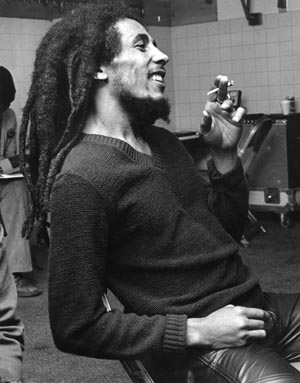 1980 - In September he begins the American part of the world tour as opening act for the Commodores for two sold-out nights in Madison Square Garden, anxious to reach the African-American audience which has always eluded him. The following day, Bob collapses in Central Park while jogging with Danny Sims and "Skill" Cole. Doctors tell him the melanoma cancer has spread to his lungs and brain, and say that he has but weeks to live. Desperate, he turns to a doctor named Josef Issels in Bavaria, and flies to his Bavarian clinic as the year ends.
1981 - Dr. Issels keeps Bob alive for several months, but at the beginning of May he tells Bob there is no more hope. Bob leaves for Jamaica, but makes it only as far as Miami, where his mother lives. On Monday morning, May 11, Bob dies in the company of his family. His final words to son Ziggy are "Money can't buy life."
Truly, money can't buy life. We are the only sole responsible of what life may bring to our lives and we made our own destinies. Bob Marley once said in one of his famous songs. "Life is one big road with lots of signs. So when you riding through the ruts, don't complicate your mind. Flee from hate, mischief and jealousy. Don't bury your thoughts, put your vision to reality. Wake Up and Live!"

0 Comments


