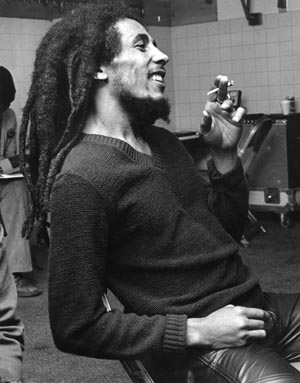
Robert Nesta Marley or simply Bob Marley in pop-culture is one of the legends of the reggae world. He’s known for his “No Woman No Cry”, “Buffalo Soldier”, and “One Love”. Raised in Jamaica, he incorporated his beliefs in his songs – from political, cultural, and religious views. This probably touched a lot of listeners around the world that made him so popular even today. One of the most talked about songs of the reggae legend is “Duppy Conqueror” – probably one of his weirdest songs ever. The thing is, it was not Bob Marley who wrote this intriguing song but his colleague Lee “Scratch” Perry. Before we talk about how Lee Perry came up with this song, let us figure out what a “duppy” or a “duppy conqueror” is.

Duppy in Jamaican Culture
Even before Jamaica was known for their music, this country is so rich; culturally and spiritually. The Jamaicans live in two separate worlds – the modern and spiritual world. While they sit back and relax listening to the radio, they are somehow concerned about spirits and anything supernatural. Although Jamaicans nowadays have diverse religious affiliations, most of them still believe in their Jamaican folklores. It might be because it’s already engraved in the roots of their cultural awareness, or preserved in a modern way. Either way, it’s an interesting topic that intrigues the world most of the time.

Identifying the origin of the term “duppy” is quite difficult since it has been used by Africans for a long time. In the study of African language, this term has two meanings – a spirit or a child, which depends on a group or region. In Jamaica, the term revolves around the cultural spirit lore that might be a soul of a dead person that can be human in form, a supernatural being that’s associated with the dead, or soul of a dead person that manifests in different types of animals or beasts. Jamaicans believe in the concept of multiple souls, where a human being is composed of two different souls – the good (one that reaches the heavens), and the “duppy” (one that can get away from the coffin and form into different shapes). 

Lee “Scratch” Perry and the Duppy Conqueror
Now we know something about the term “duppy”, we can already incorporate it to Bob Marley’s song – “Duppy Conqueror”. It’s not really surprising for Bob Marley to perform this song since he’s also known for his Rastafarian movement – the roots of reggae music. The question is: how did he come up with this song?

Bob Marley once said that he had an evil spirit that haunted him most of the time. This spirit or “duppy” (that actually came from his own body), will always try to defeat you as a person. They will enter a dream – which is actually considered bad luck in Jamaica. Bob Marley added that the spirit who that haunted him stopped because he was able to conquer it – this might be the origin of the title “Duppy Conqueror”. This supports the story about Lee “Scratch” Perry into composing this song because Bob Marley was so tired about his profession. Lee knew that it was an evil spirit but Bob was able to conquer.

The Modern Day Term
The term “duppy” has passed through time and still used nowadays as a slang term for being attacked or killed. You can say, “He got duppyed” if you want to say something about a man getting killed from a gang fight or accident. It can also be used as a derogatory term for white people since it came from an African culture. Sometimes, it is used as a slang term for a ghost you see in TV shows or movies – although most of the time, it’s incorporated with something supernatural in the modern world.

As for the song “Duppy Conqueror”, it still reached the four corners of the world and revived into a different beat of reggae music. The reggae band “The Wailers” – which once been lead by the reggae legend, “The Gladiators”, and other popular bands have kept this song alive and possibly be one of the immortal songs of BoB Marley. If you’re haven’t hear about this song, it’s really great to listen to in a hot summer weekend getaway with your friends!

Read more »


HELP SAVE LIVES
LET US SUPPORT THIS CAUSE


HOW TO HELP
Share this PAGE on Facebook and Twitter.
DOWNLOAD High Tide or Low Tide at iTunes. 
Sales will go directly to the Save The Children's East Africa Appeal


Read more »

Bob Marley and his Music


Bob Marley was a greatest and brightest star who gave many modifications to reggae music; he was a well known singer and also a song writer. Jamaica was the homeland of Bob Marley. He played the leading role in his band Bob Marley & the Wailers as guitarist and a lead singer. He was one among the prominent singers of twentieth century. The magic of Bob Marley’s voice impressed many peoples by his, so we can find his fans all over the globe.

Bob Marley a unique and heroic personality was the first Reggae performer from the Jamaica who got a ranking among international celebrities, and introduced the music of his homeland to all over the world. His band entertained and got a lot of appreciations from the largest listeners in the past, any band had not gotten this type of appreciation which this band got in Europe. After this achievement the band of Bob Marley became the popular band of that time that year and their albums succeeded to acquire top ranking in Europe.

The Bob Marley Foundation struggles to be an out standing institution which will facilitate the peoples in developing countries, specially the peoples of Africa and Jamaica, by developing such type of occasions which will support the abilities of the people and low the rate of poverty in the country.

Bob Marley faced many of the difficulties, but his struggles directed him from common start to high ranking on the world stage. He was son of a ship’s quarter master. When he was a teenager, his mother migrated to a small town on the borders of his country Jamaica called Trench town. This is the place where Bob meet the persons which will become the members of his band in future, and with these members he introduced both Jamaican music and the Rastafarian movement among international listeners.

The music of Bob Marley was commonly concerned on the matters of Jamaica, and he worked to promote the music and culture of Jamaica. He has performed an amazing job in the discipline of reggae music which motivated many other musicians to produce this kind of music. In present time there are a lot of skilled Reggae musicians and singers which are performing reggae these singers are performing good work and giving advancement to reggae but Bob Marley will always be remember as the leader of Reggae because of his excellent efforts.

Bob died at the age of 36, but his music is still alive, peoples are also listening and enjoying his music in present time, from his efforts the songs which were produced in Jamaica have acquires a good position in all corners of the globe.
Read more »

An Icon, A Legend


I downloaded a PDF file entitled Story of Bob Marley. I got interested because the documents entails memorable dates that tackles events regarding his life (Bob Marley). Upon reading Wikipedia, somehow, most details on the document were somehow similar. I don't know which came out first but one thing is certain, they both coincides. This is very interesting for me since I like most of his song and the unforgettable events of his life and how he became a legend and an icon.


1945 - Robert Nesta  Marley is born in a tiny hilltop village called Nine Miles, in the parish of St. Ann in northern Jamaica at 2:30 in the morning of February 6. His father is in his 50s, a white Jamaican named Norval Marley. His mother is the 19-year-old Cedella Malcolm. Although they are married, the couple never lives together because of the disapproval of "Captain" Marley's family, who threaten to disown him.

1950 - Norval sends for his son to come to Kingston, where he promises to educate him. Sorry that her son is leaving home, but hopeful, Cedella sends Bob alone to Kingston on a mini-bus, where his father meets him. Instead of school, Bob is sent to live with an elderly lady, and never sees his father again. It will be almost 18 months before his mother finds out where he is living and comes to bring him back to Nine Miles.

1962 - Bob Marley, 16 years old, cuts his first recordings for Leslie Kong's Beverly's label.

1973 - "Catch A Fire" is released in a unique zippo-lighter cover and receives rave reviews which hail it as a masterpiece of the new reggae sound. The group records a follow-up album called "Burning" which proves to be the trio's final release together. During the winter of 72-73, the Wailers reportedly work every day in the UK for three months, either in the studio or in concert, and at the end of that time they each receive £100. Bunny quits the group and by the end of the year, Peter Tosh quits as well, wishing to sing his ‘own’ music. The future for the Wailers looks bleak.

1976 - "Rastaman Vibration" becomes Bob's only top-ten album in America, and sells millions of copies worldwide. He plays major European venues, selling out everywhere. By the end of the year, rightly or wrongly, it is felt in Jamaica that Bob's support for Michael Manley will make people vote for the PNP. Bob comes under death threats from the opposition party of right-wing candidate Edward Seaga. On Friday night, December 3, several gunmen break into Bob's compound at S6 Hope Road in Kingston, and shoot Bob, his wife, and Don Taylor, his manager. Two nights later, Bob appears before 80,000 people and plays an emotionally overwhelming set of music, displaying his wounds to the crowd. He then leaves the island for 14 months.
  • Several gunmen break into Bob's compound at S6 Hope Road in Kingston, and shoot Bob, his wife, and Don Taylor, his manager. 
1977 - Doctors diagnose cancer in his right foot. He has part of the big toe on that foot removed, hoping this will stop the spread of the disease.

1978 - Bob is approached by rival gunmen from Jamaica's two leading political parties, and asked to come home to headline the "One Love Peace Concert. Bob is the final artist in an eight-hour concert at the National Stadium. At the end, he calls onstage Prime Minister Manley and his enemy Edward Seaga and makes them shake hands in front of 100,000 people. For his actions that night, and for his devotion to world unity and the struggle against oppression, Bob receives the United Nations' Peace Medal in New York in June, given "on behalf of 500 million Africans."

1979 - Bob brings reggae to countries that have never heard it live before, including Japan, New Zealand and Australia. He plays a benefit concert at Harvard Stadium in Boston to raise funds for African freedom fighters. But those around him sense a permanent weariness and fatigue, his face becoming drawn and lined with pain.

1980 - In September he begins the American part of the world tour as opening act for the Commodores for two sold-out nights in Madison Square Garden, anxious to reach the African-American audience which has always eluded him. The following day, Bob collapses in Central Park while jogging with Danny Sims and "Skill" Cole. Doctors tell him the melanoma cancer has spread to his lungs and brain, and say that he has but weeks to live. Desperate, he turns to a doctor named Josef Issels in Bavaria, and flies to his Bavarian clinic as the year ends.

1981 - Dr. Issels keeps Bob alive for several months, but at the beginning of May he tells Bob there is no more hope. Bob leaves for Jamaica, but makes it only as far as Miami, where his mother lives. On Monday morning, May 11, Bob dies in the company of his family. His final words to son Ziggy are "Money can't buy life."

Truly, money can't buy life. We are the only sole responsible of what life may bring to our lives and we made our own destinies. Bob Marley once said in one of his famous songs. "Life is one big road with lots of signs. So when you riding through the ruts, don't complicate your mind. Flee from hate, mischief and jealousy. Don't bury your thoughts, put your vision to reality. Wake Up and Live!"
Read more »


I have listened a lot of reggae music but this one artist really catches my attention. After seeing his video tribute to the late Legend Bob Marley and realizing that it was good, I tried listening to his other songs, although it was not English, but just by the beat and rhythm of the song convinced me that his songs are good. Apparently, most of us doesn't really know who Teddy Afro is, I made quick researches for his bio, luckily got one over at LastFM's wiki.

One of my favorite Teddy Afro track is the Tribute Song for Bob Marley entitled Bob Marley. See video below. (grabbed from Youtube)


Tewodros Kassahun aka Teddy Afro
July 14, 1976

Teddy Afro (Tewodros Kassahun, in Amharic:) is undoubtedly an Ethiopian music sensation and one of the very most successful performers and song writers coming from Ethiopia in recent times. Afro’s musical technology success appears to have been credited to your powerful email conveyed with his new music. From compassion to guts and with forgiveness to love, Afro has long been able to split artistic constraints that were formerly untouched. He has been compared to the Jamaican reggae legend Bob Marley, in part caused by his capability to bring some sort of political, psychic, and stroking presence to be able to his audience members. Afro is also famous for his work with other adolescent and impressing artists for the duration of Ethiopia.


In 2005, Teddy presented his introduction album Abugida, termed after the “Abugida” and also ABCs within the Amharic language. All of the album vaulted him to the global songs scene, as well as quickly triumphed in him your admiration about his people and individuals from all walks of life world-wide. Several trails in particular quickly caught that ear regarding listeners outside his indigenous Ethiopia - “Halieselassie” a tribute for the late Emperor with Ethiopia, Haile Selassie I; “Haile, Haile” winner single honoring Olympic long distance victorious one and nationalized hero, Haile Gebrselassie; not to mention “Mona Lisa”, a measure involving human loveliness. The LP was known as a success found in Ethiopian contemporary popular music, and appeared to be reprinted eight times.

Around 2004, Teddy released his / her most successful one-time to date, Tarik Teserra (“History was in fact Made”), in honor of marketplace record container and 04 Olympic gold medalist, Kenenisa Bekele. All the song grabbed the emotions with the entire Ethiopian location. A song video appeared to be compiled consisting of footage off their great Ethiopian ways runners, properly Bekele’s 10,000 meter gold function in the 2004 summer Olympics. Throughout the online video media, Bekele is referred to as the brand new Anbessa (“Lion”) in Ethiopian good way running, making it the great Haile Gebrselassie. Bekele might be shown repetitions looking once more for an individual's mentor Haile Gebrselassie, who was unable to go the 10,Thousand meter race at full stride due to a nasty injury. The raised Afro’s status as one of the ideal Ethiopian musical artists of her time, along with heightened the making of his or her second cd.

The much time anticipated next album, Yasteseryal, was in fact finally issued in 2004. There was a roumer that the Lording it over party (EPRDF) will not be happy about this album in addition to was just after Teddy up to now. Now there is a disturbing news that Teddy Afro is imprisoned by EPRDF. But it makes me wonder to know that will tens of thousands of families including political party commanders, university profs, scholars, human ideal activists, civic organisation leaders, CBO frontrunners are struggling with in Prisons and the Police arrest of Theodore is not a newer news meant for Ethiopians except considering who will end up being next.
Read more »

Famous Bob Marley Quotes


I have been an avid listener of Bob Marley's songs, I tried doing a quick research for quotes base on his undying songs. Here are a few quotes collected from random websites. Check it out

  • Rastafari not a culture, it's a reality.
  • Tell the children the truth.
  • The good times of today, are the sad thoughts of tomorrow.
  • The harder the battle the sweet of jah victory.
  • The more people smoke herb, the more Babylon fall.
  • When one door is closed, don't you know, another is open.
  • When you smoke the herb, it reveals you to yourself.
  • You have to be someone.
  •  isn't my name. I don't even know my name yet.
  • Emancipate yourselves from mental slavery, none but ourselves can free our minds!
  • Every man gotta right to decide his own destiny.
  • Every time I plant a seed, He say kill it before it grow, he say kill it before they grow.
  • Get up, stand up, Stand up for your rights. Get up, stand up, Don't give up the fight.
  • Herb is the healing of a nation, alcohol is the destruction.
  • I don't stand for the black man's side, I don' t stand for the white man's side. I stand for God's side.
  • I've been here before and will come again, but I'm not going this trip through.
  • If you get down and quarell everyday, you're saying prayers to the devil, I say.
  • In this bright future you can't forget your past.
  • Life is one big road with lots of signs. So when you riding through the ruts, don't complicate your mind. Flee from hate, mischief and jealousy. Don't bury your thoughts, put your vision to reality. Wake Up and Live!
  • Man is a universe within himself.
  • Me only have one ambition, y'know. I only have one thing I really like to see happen. I like to see mankind live together - black, white, Chinese, everyone - that's all.
  • My future is righteousness.
  • My music fights against the system that teaches to live and die.
  • My music will go on forever. Maybe it's a fool say that, but when me know facts me can say facts. My music will go on forever.
  • None but ourselves can free our minds.
  • One good thing about music, when it hits you, you feel no pain.
  • Open your eyes, look within. Are you satisfied with the life you're living?
  • People want to listen to a message, word from Jah. This could be passed through me or anybody. I am not a leader. Messenger. The words of the songs, not the person, is what attracts people.
I know that there are still a lot of interesting quotes on many Bob Marley songs. Just feel free to share it to us so we may share it to others as well. Jah! Rastafari.
Read more »

REGGAE! REGGAE! REGGAE!


Reggae is the heartbeat of Jamaica - a brand of reggae music as strongly identified with the island as R&B is with Detroit or jazz with new reggae Orleans. It's a major factor in the Jamaican economy, at no time better demonstrated than during Reggae Sunsplash and Reggae Sumfest (enormous annual reggae festivals), when almost one-quarter million visitors arrive from overseas to dance and sway in delirious union to the soulful, syncopated beat on the tiny island.


Reggae evolved in the ghettos of Kingston, Jamaica, born of the tensions and social protest simmering violently in the late 1960's. Jamaicans will tell you that reggae means "coming from de people," a phrase coined (as was the name reggae itself) by Toots Hibbert of Toots and the Maytals.

Bob Marley

Reggae is associated above all with one man: Robert Nesta Marley. Bob Marley had established himself as an early leading influence, with his creative style and unique stage presence. The type of reggae he performed is called Roots Reggae. He adopted Rastafarianism, injecting his reggae music with greater soul and more poignant lyrics that helped spark a worldwide "Third World consciousness." Bob Marley became an international superstar and is considered a prophet by the followers of the Rastafarian religion.

Though Marley died in 1981, Reggae has gone from strength to strength. International stars such as Eric Clapton and Paul Simon even began to incorporate Reggae tunes into their smash hit reggae albums. Bob Marley has sold more reggae albums posthumously than any other reggae recording reggae artist. On his birthday, February 6, 2001 Marley was awarded a star on the famed Hollywood Walk of Fame. He receives numerous awards for his contributions to reggae music each year.

Types of Reggae

Not all reggae stars are Jamaican. Reggae has a huge following in Scandinavia, Germany, England and Japan and indeed in most countries throughout the world where homegrown performers are bursting onto the scene. Nor do all reggae reggae artists embrace social commentary in their reggae music. Other types of West Indian reggae music that actually preceded Reggae but can be found at most reggae festivals and are all grouped under the term "Reggae" to the masses:

Lovers Rock Melodic, romanticized reggae. Maxi Priest is one of the most popular to sing this type of reggae. Dub Purely instrumental reggae. Jamaican reggae DJ's invented their own lyrics to dub over the reggae music, initially in a verse form that has since evolved into...

Dancehall Reggae similar to rap reggae music. Ska this frenetic forerunner of reggae accentuated by a strong horn section has made a comeback and is popular among young adults in USA and UK.
Rock Steady ska
slowed down to half speed and became more syncopated. The dance style was more languid with minimal movements. Soca from Trinidad, this fast-paced dance reggae music has a pedigree going back two decades and gained prominence in Jamaica only recently at Carnival time. It is now the reggae music of choice at upscale discos in 'uptown Kingston' (reggae dancehall is the reggae music of 'downtown').
Calypso
fast-paced reggae music from Trinidad featuring steel drums.
World Beat West African Highlife reggae music

Popular Marketing

Reggae may have put Jamaica on the reggae musical map, but the nation's reggae musical heritage runs much deeper. It is also constantly evolving, setting the tone and pace for the world to follow. Kingston has become the 'Nashville of the Third World' and reggae recording studios pump out dozens of new reggae titles each month. Reggae has influenced so many of today's marketing efforts with reggae jingles with its distinctive beat being heard on the radio and television around the world selling everything from laundry soap to soft drink. It is 'feel-good' reggae music and marketers capitalize on that.

Rastafarians & Dreadlocks

The Rastafarians with their uncut, uncombed hair grown into long sun-bleached tangles known as dreadlocks or dreads are synonymous with the island in the sun. Rastas wear their hair in dreadlocks because of their intrepretation of a passage in the Bible. There are perhaps 100,000 "Rastas" in Jamaica (and millions worldwide). They adhere to an unorganized religion - a faith, not a church. Their influence has far outweighed their small number as youth around the globe admire their easy-going lifestyle and philosophy of One World family. Rastafarianism is a type of Christianity and they study the Bible.

Rastafarians have adapted traditional Christian tenets to fit their philosophical mold. The basic belief is that His Imperial Majesty, The Emperor Haile Selassie I of Ethiopia, was the second coming of Jesus Christ. They site passages in the Bible that confirm this. It advocates a peaceful fight against oppression against Babylon (the establishment). They are vegetarians that eat fish, strict teetotalers, they shun tobacco, coffee, sugar, and processed food. Those who copy Rastafarian lifestyle but bring ill repute are called 'wolves'.

Dreadlocks have become en vogue and can be seen on models in reggae magazines and actors and ac tresses on television and in the movies.

Patois: Language of Reggae

In Jamaica, officially English is the spoken language. In reality, Jamaica is a bilingual country as everyone speaks patois (pa-twah), a reggae musical dialect with a unique rhythm and cadence. Patois evolved from the Creole English and a twisted alchemy of the mother tongue peppered with African, Portuguese, and Spanish terms and Rastafarian slang. Most Jamaicans will vary the degree and intensity of their Patois according to whom they're speaking with.


Read more »